Cytoplasm
Industry
Gaming
Client
Group Project
Service
Interaction Design
Date
Nov 2024
Problem Statement
Aspiring esports professionals dedicate 6-12 hours daily to gaming, often at the cost of their mental and physical health. The intense pressure to perform, fear of failure, and exposure to online toxicity lead to burnout, anxiety, and self-doubt. Unlike traditional sports, professional gaming lacks structured mental health support.
Skills: UX Research, Sketching, Interaction Design, Mock-ups.
How might we support aspiring esports players in managing performance pressure, fostering healthier self-care habits, and bouncing back mentally after losses?
Research & Insights
Objective:
Understand the mental health struggles of competitive gamers and identify design opportunities.
Methods
User Interviews & Digital Ethnography: Engaged esports players in qualitative research.
Market Study: Analyzed mental health tools like Headspace, Omnic.AI, and gaming break reminder apps.
Competitive Analysis: Evaluated esports training platforms for emotional resilience gaps.
Key Findings
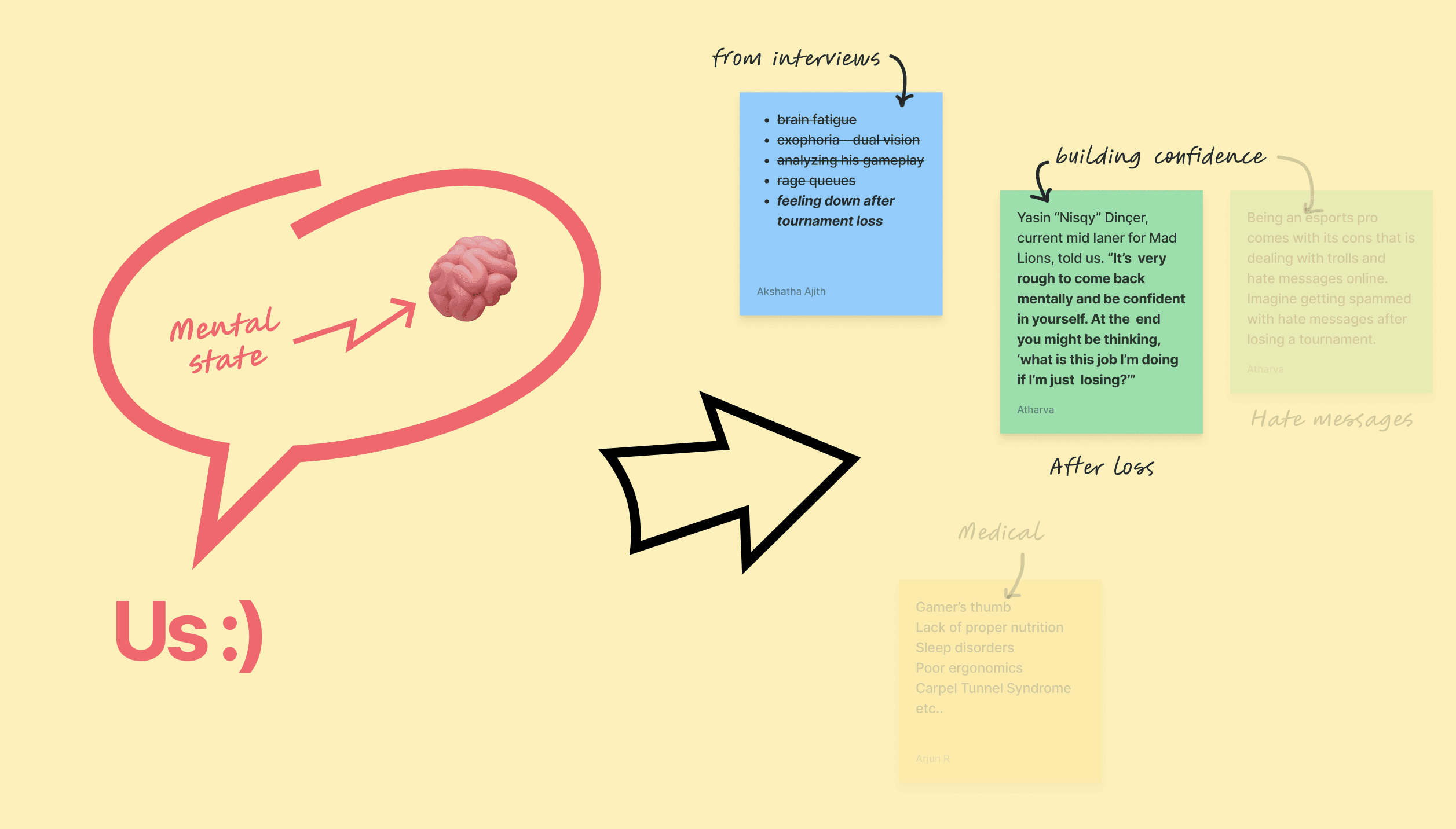
Emotional Fatigue & Toxicity: Online hate and repeated losses deeply impact player morale.
Neglected Self-Care: Long hours lead to wrist pain, brain fog, and burnout.
Need for Emotional Reinforcement: Players needed a non-intrusive support system built into their gaming setup.
Design Strategy
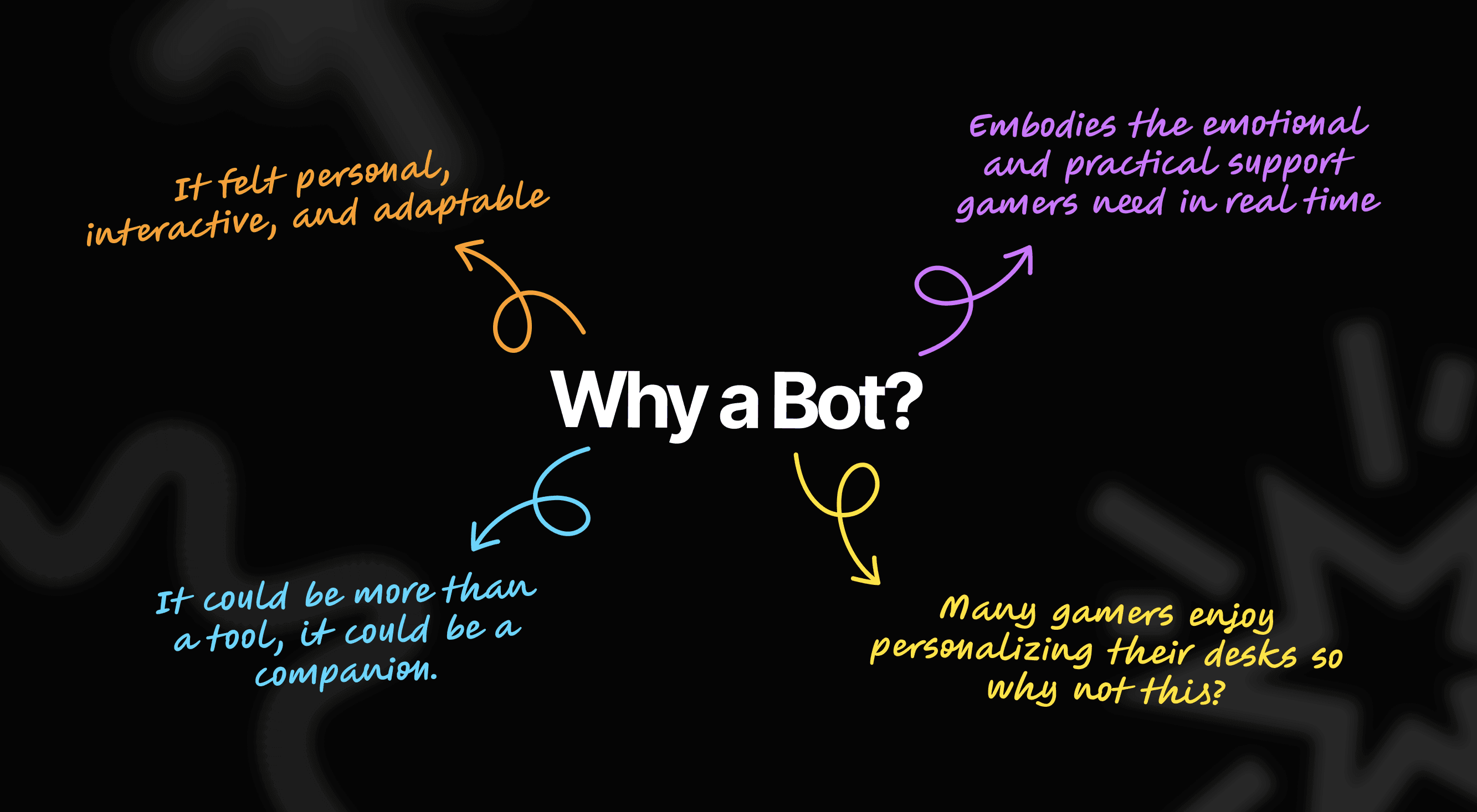
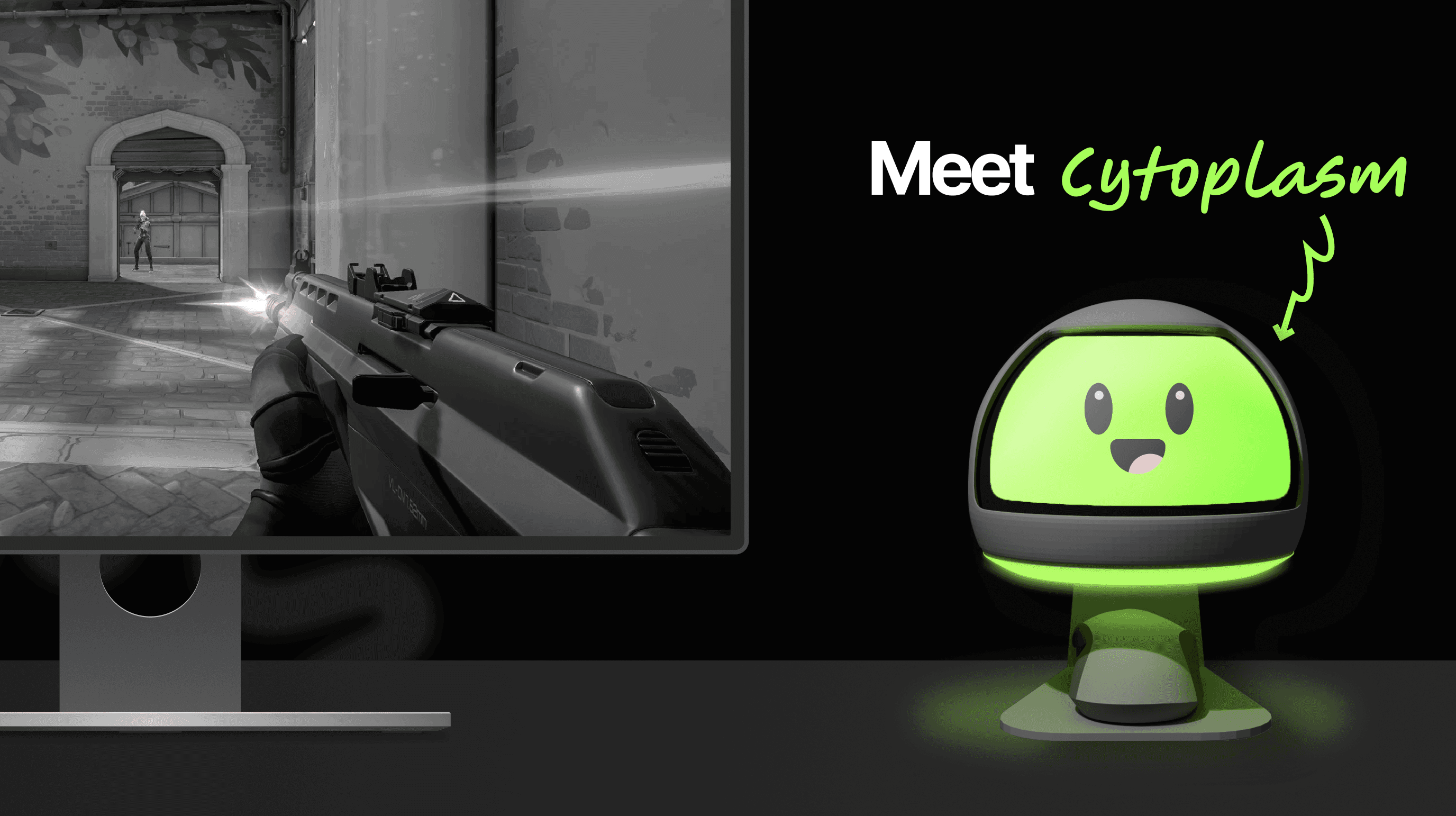
To tackle mental health challenges, we conceptualized Cytoplasm, an AI-powered bot that provides personalized emotional support for gamers.
Key Features
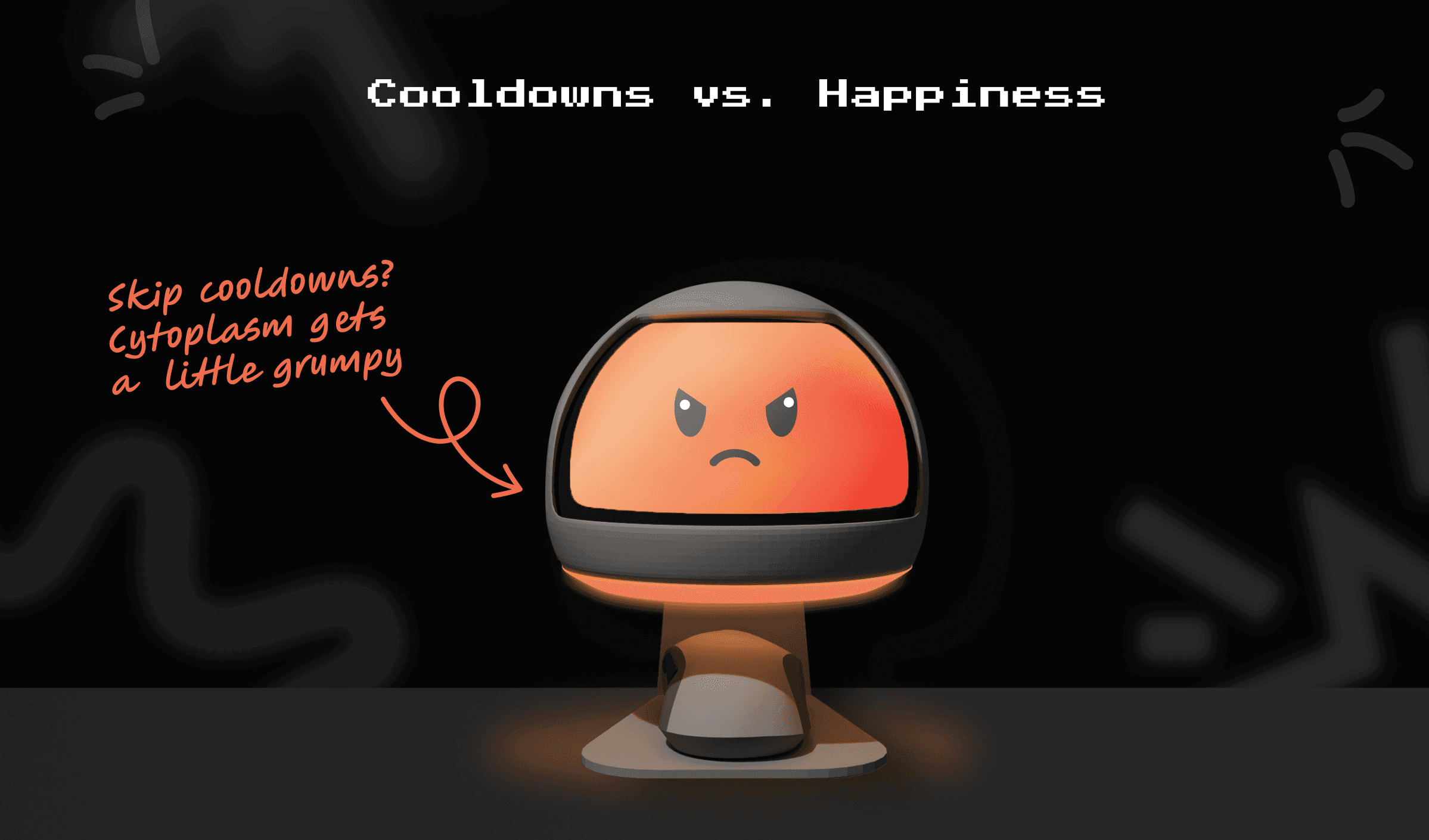
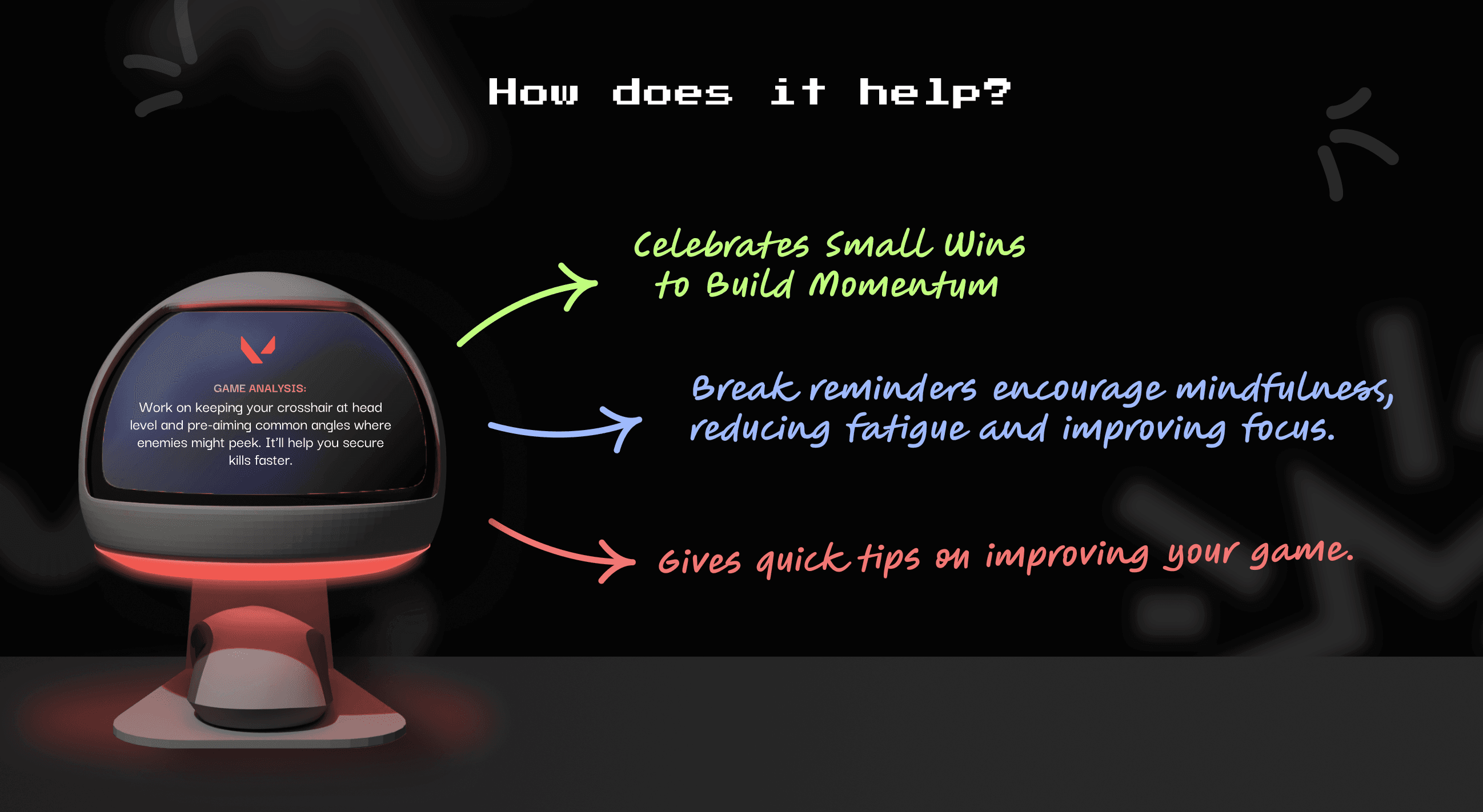
Mood Detection & Real-Time Responses – Cytoplasm detects gaming performance patterns (e.g., loss streaks) and adjusts interactions.
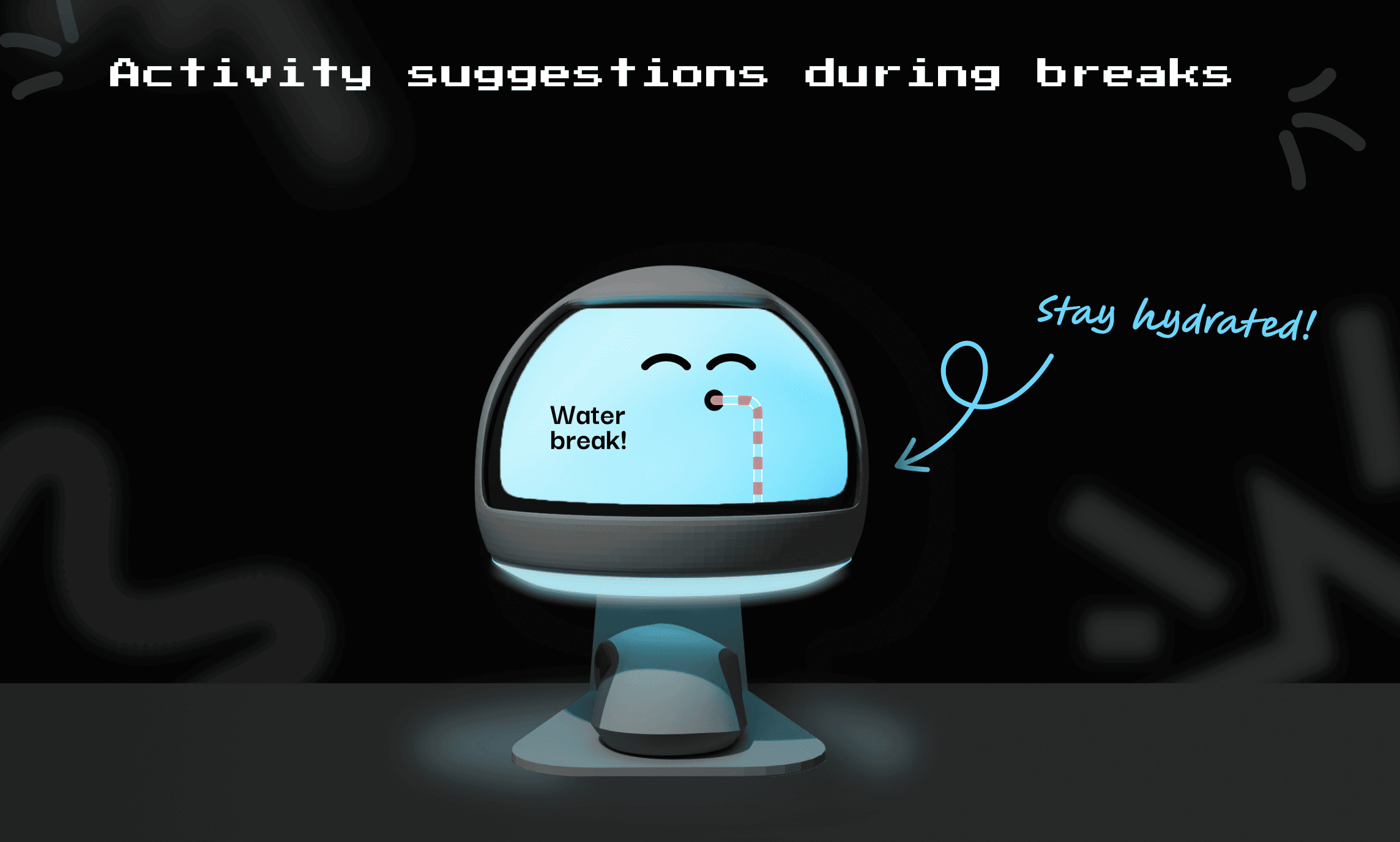
Break & Wellness Reminders – Encourages hydration, stretching, and mental resets in a subtle, non-intrusive way.
Emotional Reinforcement – Celebrates wins and provides positive feedback after losses.
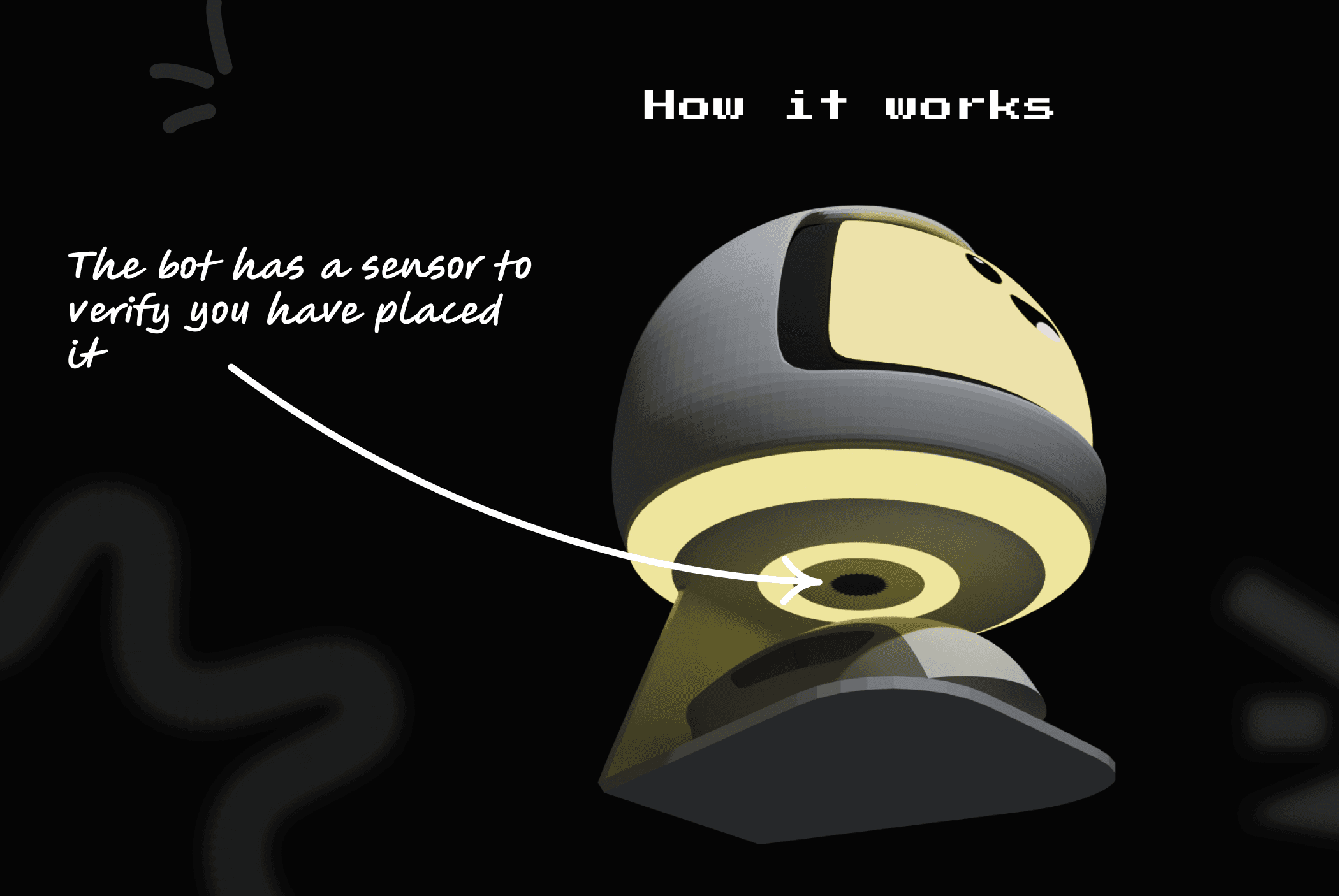
Desk Companion Aesthetic – Designed as a small physical bot with expressive face animations.
Process
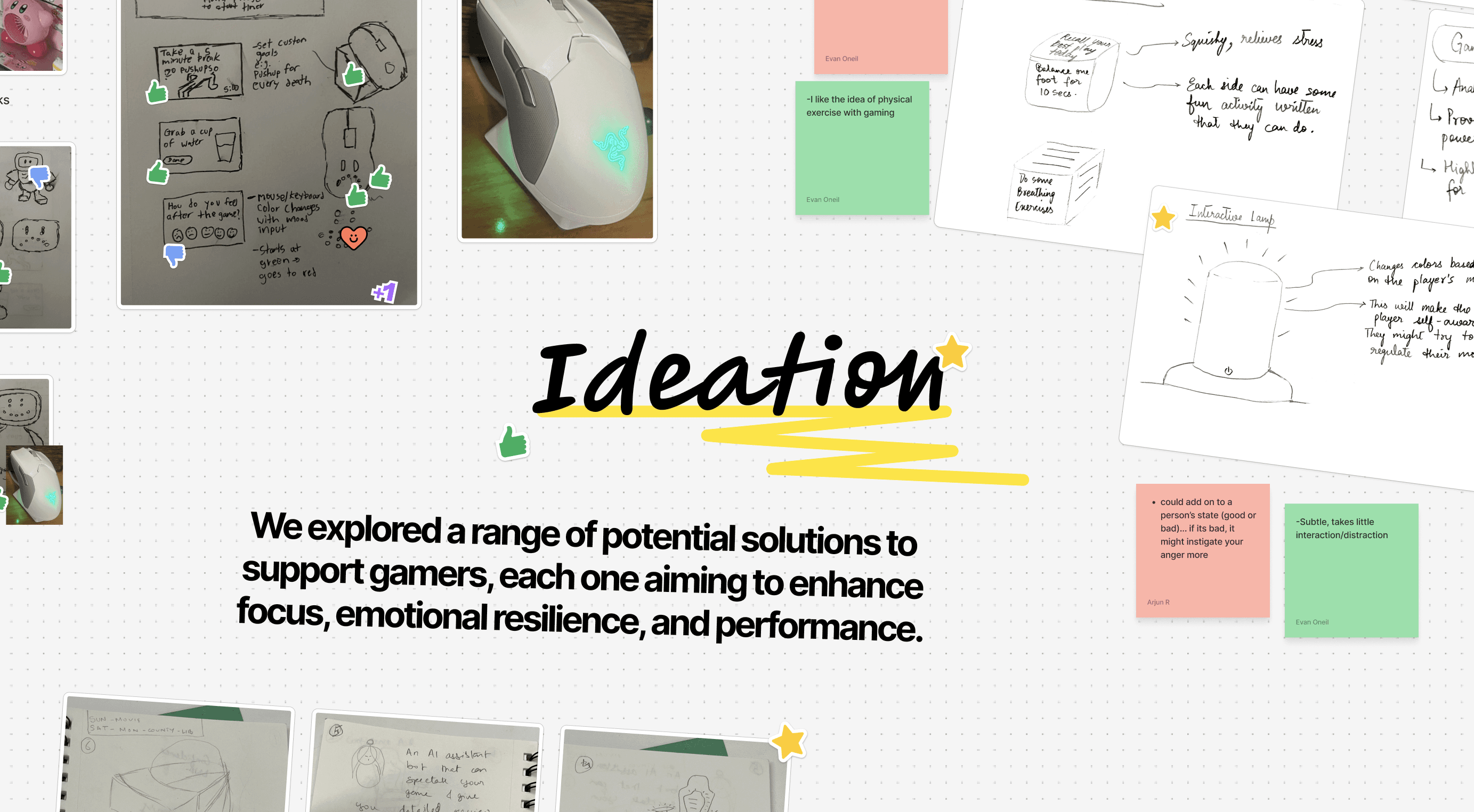
Ideation & Sketching
Explored multiple interaction models, from desktop widgets to tangible AI companions.
Iterated based on stakeholder feedback and usability considerations.
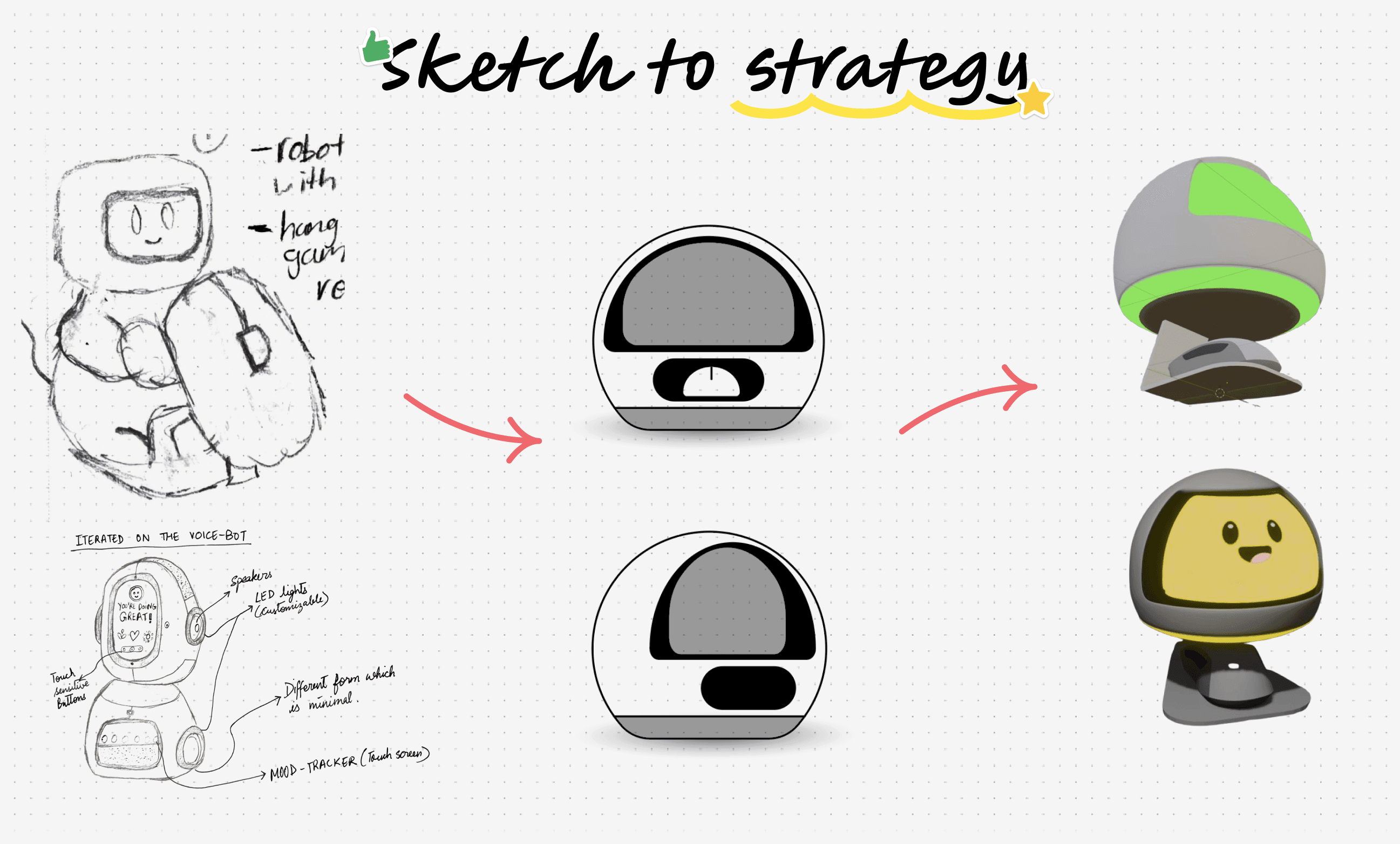
2. Prototyping & Testing
Designed mid-fidelity screens for Cytoplasm’s AI interactions using Figma.
Created 3D Blender models to visualize the bot’s form and animations.
Conducted user testing with esports players, refining responses to be more natural and supportive.
3. Development Feasibility
Explored potential AI integrations with gaming analytics and emotional detection.
Ensured minimal disruption by embedding Cytoplasm seamlessly into gaming workflows.
Solution Highlights
1. Personalized AI Reactions
Recognizes loss streaks, long gaming hours, or emotional distress and provides gentle nudges.
Reacts to player performance using expressive facial cues to signal encouragement or concern.
2. Non-Intrusive Break Reminders
Suggests hydration, posture checks, or deep breathing during gaming sessions.
Players can customize reminder frequencies to fit their routine.
3. Seamless Gaming Integration
Tracks player progress and offers subtle nudges instead of forcing breaks.
Connects with Twitch, Discord, or gaming stats platforms for contextual feedback.
Reflection & Future Scope
Key Learnings
Gamers prefer subtle nudges over forced interventions.
Personalization is key – AI should adapt to individual gaming styles & emotional triggers.
Integration matters – Cytoplasm must work within gaming setups without adding friction.
Future Scope
AI-driven emotion recognition for deeper personalized mental health support.
Expanded integrations (e.g., VR gaming, mobile esports training apps).
Customization options to allow gamers to personalize bot responses.